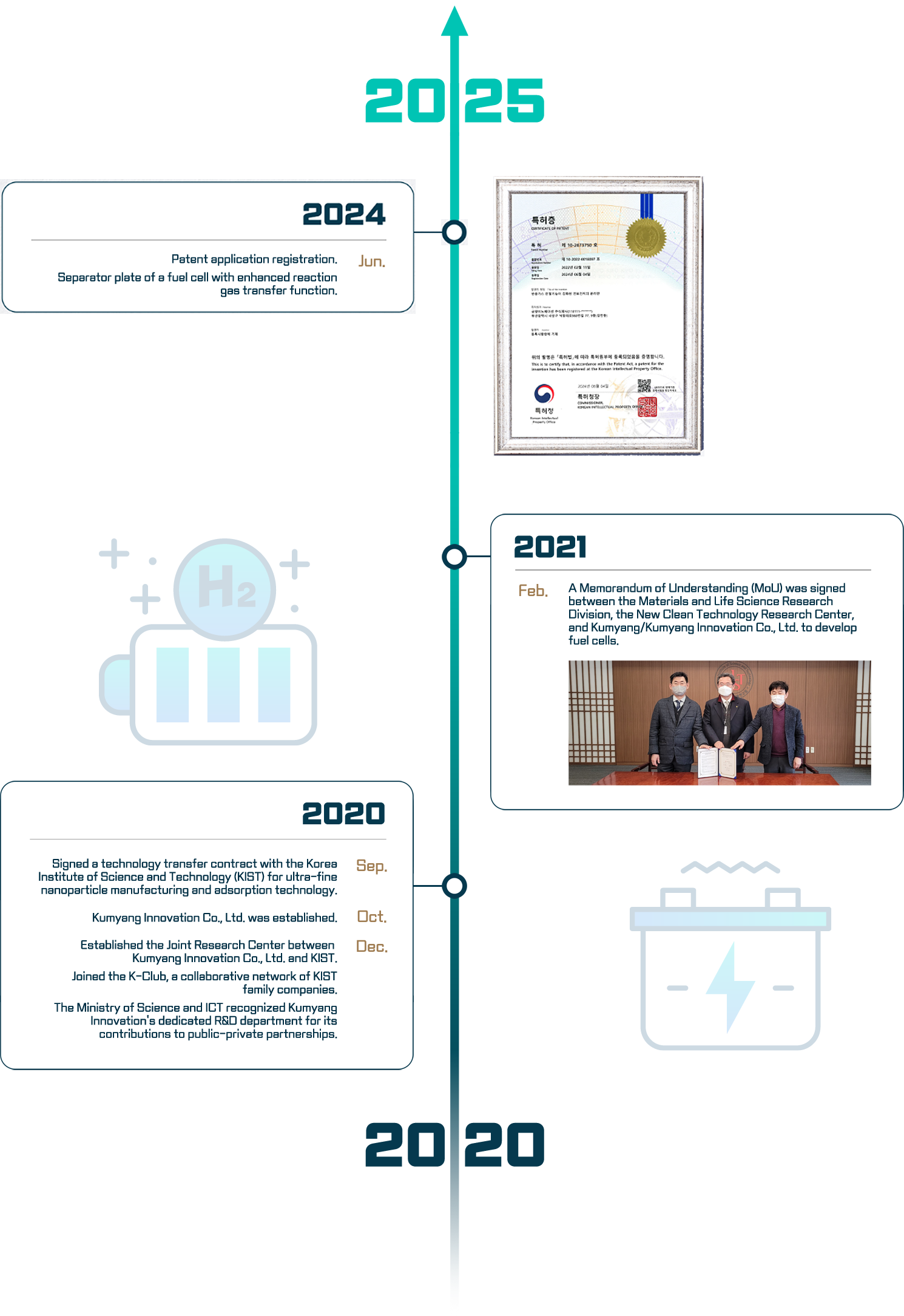
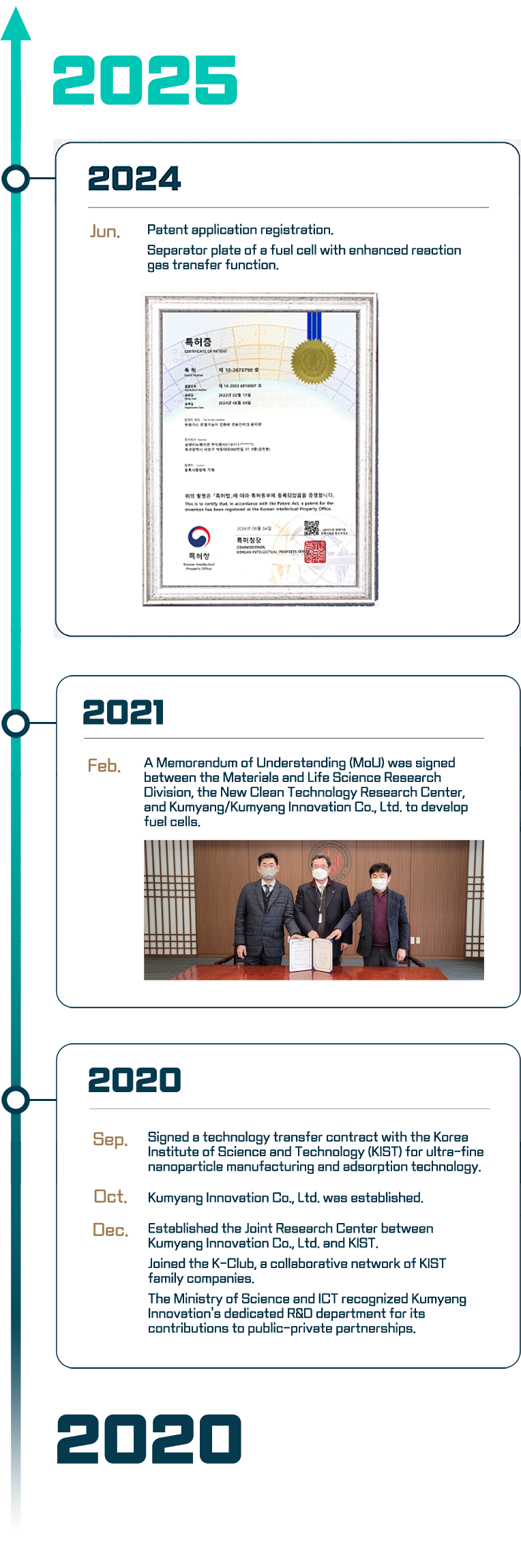
-
Fuel cell Battery

-
R&D
-
Fuel cell Battery
-
Fuel cell Battery
-
Fuel cell Battery
-
Fuel cell Battery
-
Fuel cell Battery
-
Fuel cell Battery
-
Fuel cell Battery

Hydrogen Fuel Cell Technology and Materials
Kumyang is growing as a key player in the emerging hydrogen economy

A Fuel cell which is Kumyang’s new business
Research & Development for Fuel cell
Hydrogen fuel cells, which generate electricity and thermal energy through the electrochemical reaction of hydrogen as a fuel with oxygen from the air, are environmentally friendly, with zero pollution, zero noise, and zero carbon emissions (when using green hydrogen), and can be used for both power generation and hydrogen mobility. We are conducting research on metal nanoparticle catalyst applications such as ultra-small nanoparticle manufacturing technology and nano-metal particle dipping technology.
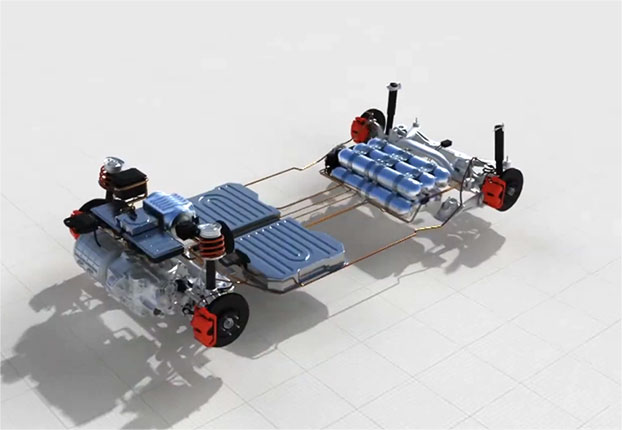
Global Fuel Cell Stack Provider!
Kumyang, a forward-thinking company that has identified fuel cell technology and materials as a critical area for future business, has taken significant steps in this direction. We have signed a technology transfer contract with the Korea Institute of Science and Technology (KIST), a leading institution in fuel cell research, for 'ultra-fine nanoparticle manufacturing and adsorption technology.' Kumyang is now at the forefront of advancing the commercialization of platinum catalyst technology, a core technology for fuel cells. Additionally, we are actively exploring future essential technologies, such as developing high-performance MEA (Membrane Electrode Assembly) in collaboration with Hydrogen Fuel Cell research.
Through our continued research and development, we are optimistic about the potential to significantly reduce the platinum catalyst used in fuel cell vehicles to less than 10 grams. This advancement will not only accelerate the transition to a hydrogen-based economy but also make fuel cell technology more sustainable and cost-effective.
Fuel cells will replace traditional internal combustion engines, and their applications will extend to a wide range of mobility sectors, including eco-friendly fuel cell vehicles, construction machinery, trains, ships, hydrogen-electric trams, drones, and Urban Air Mobility (UAM).
Through our continued research and development, we are optimistic about the potential to significantly reduce the platinum catalyst used in fuel cell vehicles to less than 10 grams. This advancement will not only accelerate the transition to a hydrogen-based economy but also make fuel cell technology more sustainable and cost-effective.
Fuel cells will replace traditional internal combustion engines, and their applications will extend to a wide range of mobility sectors, including eco-friendly fuel cell vehicles, construction machinery, trains, ships, hydrogen-electric trams, drones, and Urban Air Mobility (UAM).
World's First Developed Ultra-fine Nanoparticle Manufacturing Technology
Fuel cells are a core component in producing electricity through the electrochemical reaction between hydrogen and oxygen. Kumyang Innovation Co., Ltd. has initiated the transfer and mass production of catalyst technology, aiming to establish a pilot MEA production line through ongoing R&D efforts. Using optimized catalyst layer technology, including slurry dispersion and coating processes, we strive to reduce the cost of platinum catalysts, which account for about 40% of the stack cost. Using a catalyst synthesized with ultra-fine nanoparticle technology applied to a self-developed carbon support, we will provide products that meet customer requirements in terms of both performance and more competitive pricing. These optimized and reliable products will be applied to various fields based on their specifications and long-term reliability.
Development of Ultra-fine Nanoparticle Synthesis Technology
Fuel cell catalysts are crucial materials that determine fuel cell vehicles' cost and performance. Globally, efforts have been made to reduce catalyst costs and improve performance.
Unlike conventional commercial synthesis methods, the ultra-fine nanoparticle technology developed by Kumyang uses a simple stirring process to synthesize uniformly sized 2-nanometer and ultra-fine alloy nanoparticles in large quantities. Catalysts synthesized with this revolutionary technology, applied to our self-developed carbon support, possess high activity and durability, contributing to the performance improvement of Polymer Electrolyte Membrane Fuel Cells (PEMFC). This development is expected to reduce the cost of precious metal catalysts, which account for a significant portion of fuel cell vehicle costs. In addition to mobility, the technology is expected to meet the diverse needs of markets such as power generation, transportation, and military applications.
Unlike conventional commercial synthesis methods, the ultra-fine nanoparticle technology developed by Kumyang uses a simple stirring process to synthesize uniformly sized 2-nanometer and ultra-fine alloy nanoparticles in large quantities. Catalysts synthesized with this revolutionary technology, applied to our self-developed carbon support, possess high activity and durability, contributing to the performance improvement of Polymer Electrolyte Membrane Fuel Cells (PEMFC). This development is expected to reduce the cost of precious metal catalysts, which account for a significant portion of fuel cell vehicle costs. In addition to mobility, the technology is expected to meet the diverse needs of markets such as power generation, transportation, and military applications.
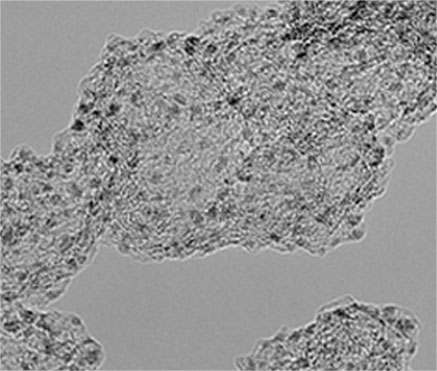
Transmission electron microscopy of Pt/C catalyst
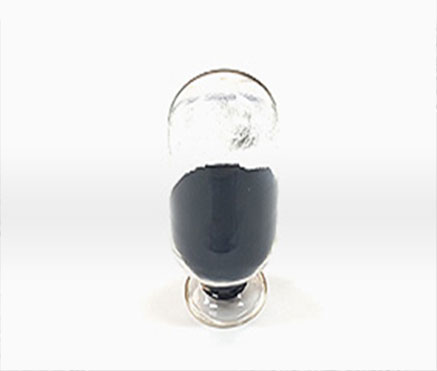
Pt/C
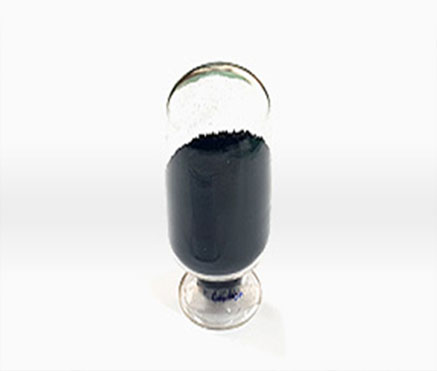
Carbon carrier